Block Paved Patios
in Ely
5.0 Stars on Google
Fully Insured
20 Years' Experience
Ely and Surrounding Villages
In Short
Block paved patios in Ely from Champion Construction. Built with proper excavation, a compacted MOT Type 1 sub-base, drainage falls and block paving suited to Fenland clay ground. A durable patio option for homes across Ely, Cambridge and nearby villages. For a free quote, call 07443 843 610.
What's Covered on This Page
Looking to Have a Block Paved Patio Installed?
Why Ely's Ground Conditions Change How a Patio Is Built
Most homeowners never think about what’s under the topsoil. We do. Every job.
Ely sits on heavy Cambridgeshire clay. That clay holds water, swells in winter, then shrinks and cracks when it dries out in summer. Block paved patios in Ely laid on top of that without proper preparation will move. You’ll see blocks lifting, edges dropping, joints opening up. We’ve been called out to fix patios around Stuntney and the Downham Road area where this has happened, the original installer skipped the groundwork and the whole thing shifted within two years.
The water table in parts of the Fens can sit high too. That means drainage isn’t optional. It’s the first thing we plan for. If water pools on your patio or runs back towards the house, you’ve got a problem that costs more to fix later than it does to get right from the start.
Here’s what we do differently because of the local ground:
- We dig out deeper than standard. On clay ground, we excavate 150 to 200mm below finished level and lay a minimum 100mm of MOT type 1, compacted in layers.
- We check the fall. Every block paved patio needs a slight slope away from your property so rainwater drains off properly.
- We allow for movement. Flexible laying methods work better on clay than rigid ones. The blocks can shift slightly without cracking.
- We compact properly. Each layer gets a full pass with a plate compactor. No shortcuts.
Get the base right and the patio stays put for years. Skip it, the blocks tell you soon enough. It’s why block paved patios in Ely need a different approach to the ones laid on sandier ground elsewhere.
We’re Champion Construction, family-run by Danny and his son. We work across Ely, Stretham, Soham, and the surrounding villages. We know this ground because we dig into it every week. That local knowledge matters more than most people realise. A patio spec that works on sandy soil in Suffolk won’t hold up the same way on Ely clay. So we adjust every job to suit what’s actually underneath your garden, not what a textbook says should be there.
Block paving isn’t the only patio option built to handle this ground. If you’d rather have a natural stone finish, our Indian sandstone patios use the same depth of sub-base and drainage planning. Prefer something low-maintenance and frost-proof, our porcelain patios are prepped just as thoroughly for Fenland clay.
Choosing the Right Block Style for Your Property
This is where most people get stuck. You’ve decided on a block paved patio, but now there are dozens of colours, patterns, and block shapes to pick from. Don’t overthink it.
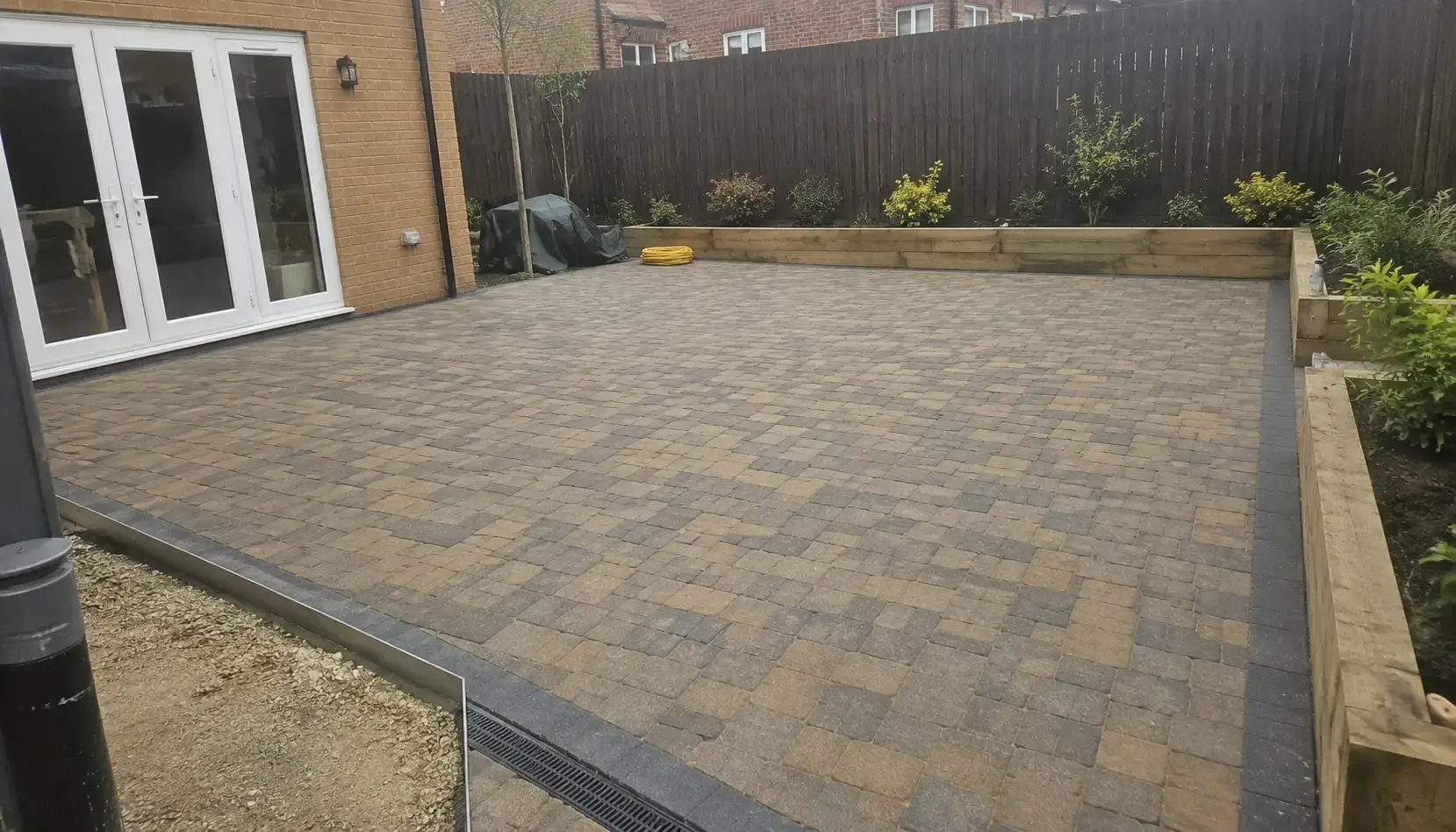
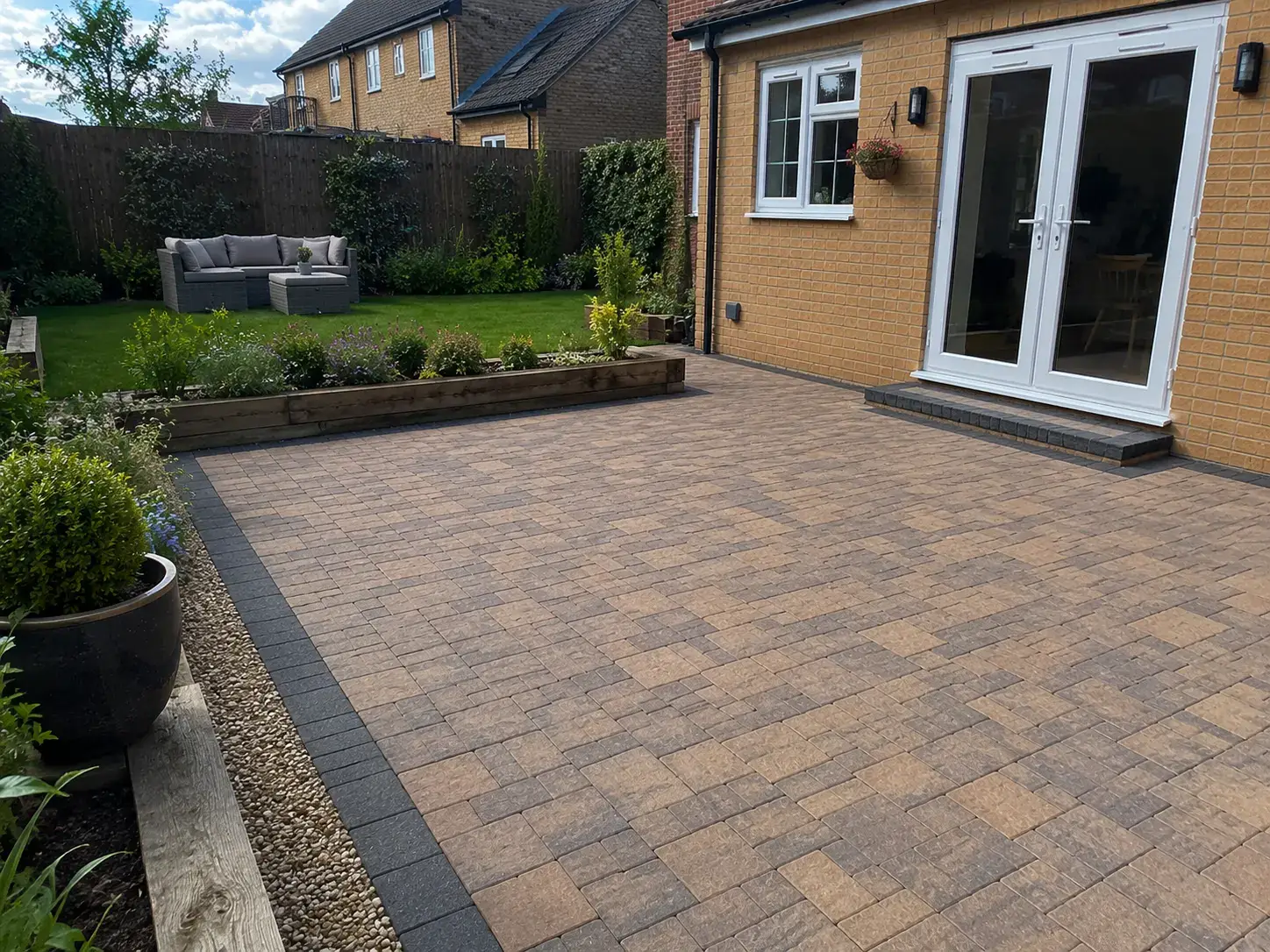
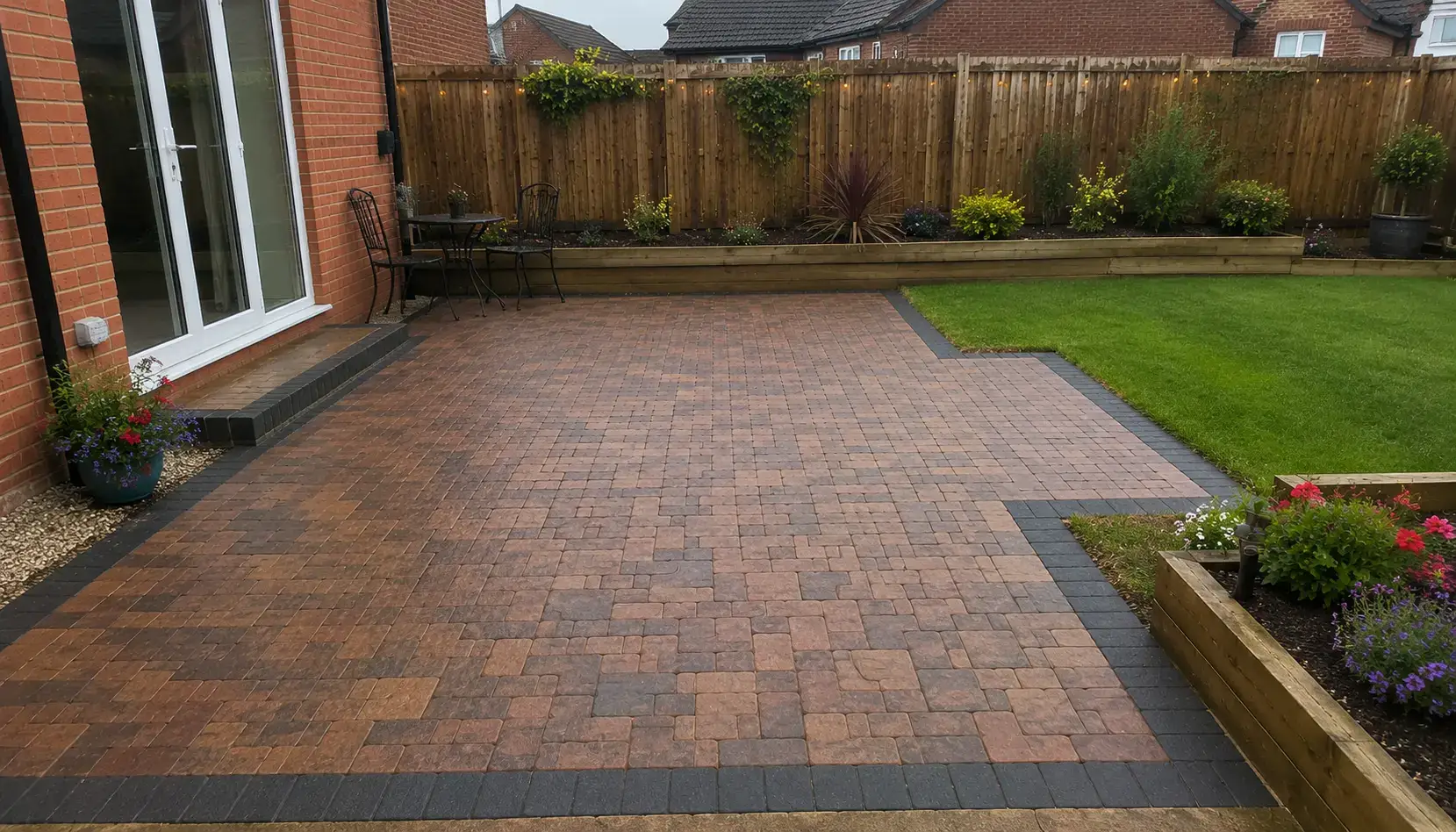
Start with your house. A red brick property in Ely looks spot on with charcoal or grey blocks. Lighter rendered walls tend to suit warmer tones like buff or brindle. We see this every week, customers agonising over samples when the answer is right there on their front wall.
Popular Block Styles We Lay
Most block paved patios in Ely and the surrounding Stretham area fall into a few tried-and-tested categories:
- Tumbled blocks give an aged, cottage look that works well with older Fenland properties
- Smooth chamfered blocks suit modern builds and create clean, sharp lines
- Mixed-size sets break up larger patio areas so they don’t look like a car park
- Driveway-grade 60mm blocks for patios that double as a path for wheelbarrows or heavy planters
Pattern matters too. A herringbone lay is the strongest option. It locks the blocks together under foot traffic. Stretcher bond looks more relaxed, a good choice for a garden setting. We’ll talk you through what suits the size and shape of your space.
One thing that catches people out until it’s too late: colour fades slightly over the first year or two as the blocks weather in. That bright sample you saw? It’ll mellow. So pick a shade you like when it’s damp, not bone dry under a shop light.
We’re Champion Construction, family-run by Danny and his son. You deal with us from the first visit. We’ll bring samples to your garden so you can see them against your house, your fence, your planting. That’s the only way to decide properly. Not from a screen. If you want to explore other patio materials too, have a look at our patio options in Ely before you commit.
Want help narrowing it down? Call Champion Construction on 07443 843610 for a free quote.
What the Installation Process Involves
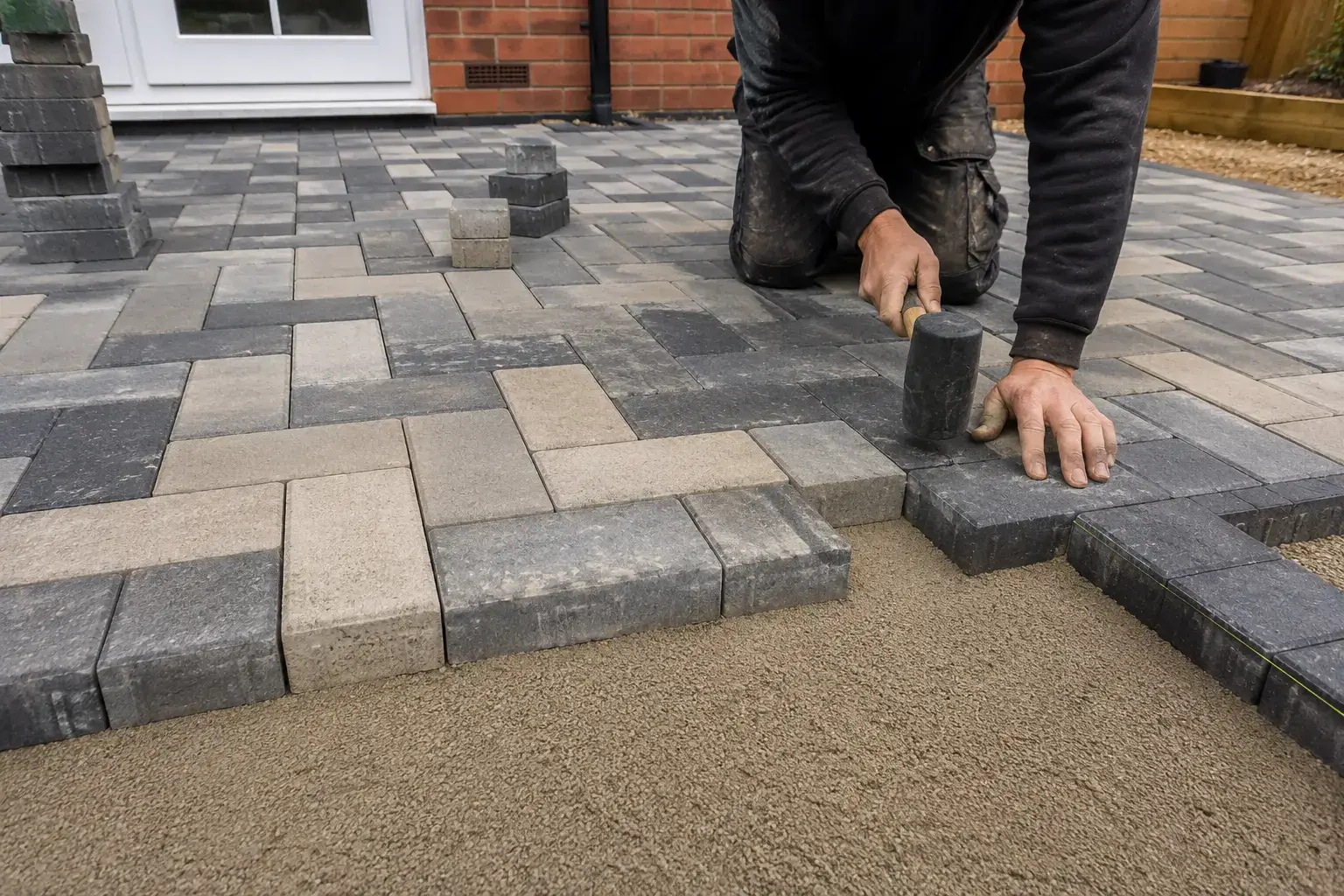
Most people want to know what actually happens once we start. Fair enough. Here’s how block paved patios in Ely go down, from day one.
- Mark out and dig. We set the patio shape using string lines, then excavate to the right depth. Around Ely, that’s usually 150mm to 200mm below finished level, deeper if the ground is soft.
- Sort the drainage. Every patio needs to fall away from your house. We work out the gradient before anything else goes in. With the heavy clay soils common around Stretham and the wider Fens, getting this wrong means standing water against your walls. Not happening on our watch.
- Lay the sub-base. This is the bit you’ll never see, but it’s the bit that matters most. We put down MOT type 1 crushed aggregate, a minimum of 100mm, then compact it with a plate compactor until it’s rock solid.
- Screed the sand layer. A sharp sand bed goes on top, levelled to an even thickness. This gives the blocks something to sit into and lets us fine-tune levels across the patio.
- Lay the blocks. We set the blocks by hand in your chosen pattern. Herringbone, basket weave, stretcher bond. Whatever suits your garden and the shape of the space.
- Cut in the edges. A diamond blade saw handles all the cuts around curves, walls, and borders. Clean cuts make a massive difference to the finished look.
- Kiln-dried sand and compact. We brush kiln-dried sand into every joint, then run the compactor over the whole surface. This locks everything together so it stays put for years. Block paving gets kiln-dried sand rather than the resin compound we use on slab patios because the narrow joints are designed to interlock, while wider slab joints need a bonded compound.
The whole process takes two to four days for a typical back garden patio in Ely. We see it every week, so there’s no guesswork involved.
We’re Champion Construction, family-run by Danny and his son. You deal with the same people from the first dig to the final sweep-up. No call centres, no subcontractors turning up unannounced. We clear everything off site when we’re done, leave your garden tidy, and make sure you’re happy before we pack up.
Want to talk through your project? Call Champion Construction on 07443 843610 for a free quote.
Thinking About New Block Paved Patios in Ely?
Talk to Champion Construction about block paved patios built properly from the ground up, with the right base, levels and drainage for local Fenland conditions. Call for a free quote.
Drainage Design: The Detail that Determines Long-Term Performance
Drainage is the part people overlook until water’s pooling on their new patio. By then it’s too late.
Block paved patios in Ely need proper falls built in from the start. We’re talking a gradient that moves rainwater away from your house and off the paved surface. In Ely, this matters more than most places. The ground around here sits low, the water table can be high, and heavy clay soils don’t drain quickly on their own. Skip this step and you’ll have standing water after every downpour.
We see this problem all the time on older patios around Stretham and Haddenham. Someone’s laid block paving flat with no thought to where the water goes. A couple of wet winters later, the blocks shift, algae builds up, and the whole thing looks tired. That’s not the paving failing. That’s the drainage failing.
How We Handle It
All block paved patios we lay in Ely get a drainage plan before a single block goes down. Here’s what that looks like:
- We survey the garden and check existing ground levels, soil type, and where water naturally runs.
- We set the falls during the sub-base stage, not after. Getting the base right means the finished surface drains properly without looking uneven.
- We install channel drains or soakaways where needed, particularly on larger patios or gardens that sit below the level of neighbouring land.
- We check the falls again once the blocks are laid, before we brush in the jointing sand.
On many gardens, a well-planned fall towards a lawn edge or a simple channel drain does the job. But some gardens need a soakaway. We’ll tell you straight if that’s the case.
And if your patio connects to an existing driveway or path, we make sure the levels tie in. No lips, no trip hazards, no water running back towards your door. Champion Construction is family-run by Danny and his son, so you deal with the same people who planned the drainage and laid the blocks. No call centres, no guesswork.
Keeping Your Block Paved Patio in Good Condition
It’s easy to forget about your patio until something looks off. Green algae creeping across the surface. Weeds pushing up between joints. Sand washing out after a heavy downpour. We see this all the time across Ely, and the good news is it’s all preventable.
Block paved patios in Ely are low maintenance. Not zero maintenance.
Once a year, give the whole area a proper clean. A stiff brush and soapy water will shift most surface dirt. For algae or moss, a pressure washer on a low setting does the job. But go easy. Too much pressure blasts the jointing sand straight out, and that’s what holds everything tight. If you do lose sand, top it up with kiln-dried sand afterwards. Brush it into the joints and let it settle.
What to Watch For
A few things tell you the patio needs attention before a small issue becomes a bigger one:
- Weeds growing through joints (means the sand has dropped or washed away)
- Blocks rocking or sitting uneven (could be a sub-base issue underneath)
- Pooling water after rain (drainage or levels need checking)
- Staining from garden furniture or plant pots (clean early before it sets in)
Fenland wet winters don’t help. The heavy clay soil around Stretham and Haddenham holds water, so proper drainage matters from day one. If your patio was laid with a good sub-base and the right fall, water should run off without sitting. If it doesn’t, that’s worth sorting out before frost season. Standing water freezes, expands, and shifts blocks out of place.
We’re Champion Construction, family-run by Danny and his son. If your block paved patio needs a bit of love, we do patio repairs too. Sometimes it’s a case of lifting a few blocks, re-compacting the base, and relaying them. Tidy little job, done in a day.
And if you spot something that doesn’t look right, don’t leave it over winter. A quick call now saves a bigger repair later. Call Champion Construction on 07443 843610 for a free quote.
Explore Our Other Patios Services
Patio Repairs
We lift and re-lay loose, sunken or uneven slabs, sorting the base and falls so the repair holds properly.
Indian Sandstone Patios
Natural stone with warm tones and individual character, ideal if you want a patio with a more traditional garden feel.
Porcelain Patios
A clean, modern patio finish that is easy to look after and works well for a sharper, more contemporary garden.
Frequently Asked Questions
Common questions about block paved patios in Ely and Cambridgeshire
Does Ely's clay soil really cause block paved patios to move?
How long does a block paved patio installation take in Ely?
What happens if drainage isn't planned properly on a Fenland property?
Will the block colour I choose look the same once it's laid?
Do I need planning permission for a block paved patio in Ely?
Looking at other patio options? Take a look at our Patios Services in Ely