
Natural Stone, laid properly. Family-run paving and roofing across Ely, Cambridge and Cambridgeshire
Indian sandstone patios in Ely from Champion Construction. Calibrated natural stone laid on a compacted MOT Type 1 sub-base, with drainage falls and jointing suited to Fenland clay ground. A durable, traditional patio finish for homes across Ely, Cambridge and nearby villages. For a free quote, call 07443 843 610.
Most gardens around Ely are flat. Properly flat. That means your patio is the first thing anyone sees when they step outside, and it stays visible from every angle. Indian sandstone handles that well because it looks good without trying too hard.
The natural colour variation in each slab gives you a finish that blends with older properties around the Cathedral quarter and newer builds out towards Stretham. No two slabs are the same. That’s not a flaw. It’s the point.
Looks aren’t why we keep recommending it. The real reason Indian sandstone works so well here comes down to how it handles Fenland weather when it’s laid properly. We get wet winters, heavy rain, and ground that holds water longer than most places because of the clay underneath. The riven surface keeps its grip in the wet, and a patio laid to the right falls sheds rainwater instead of letting it sit in puddles. Sandstone is a natural stone, so it does take on some moisture. That’s why we joint it with a frost-resistant compound and recommend sealing, which is what keeps Cambridgeshire winters from getting into the stone.
Here’s what we see time and again with other materials in Ely gardens:
Indian sandstone doesn’t do any of that. Laid on a proper sub-base with the right falls for drainage, it stays put for years. We’ve done patios in Ely that still look spot on after eight or nine years of Cambridgeshire weather.
The weight of the slabs matters too. Indian sandstone is heavy. Around 50 to 60 kilograms per square metre depending on thickness. That weight, combined with a solid base, means nothing shifts or rocks underfoot. You’re not going to trip on a raised corner after one season.
We’re Champion Construction, a family business run by Danny and his son. We’ll tell you straight if Indian sandstone is right for your garden or if something else makes more sense. Most of the time for Ely gardens, it’s hard to beat.
Sandstone isn’t the only finish that holds up on this ground. If you want something frost-proof with virtually no upkeep, our porcelain patios are worth comparing. Prefer the classic look of interlocking blocks, our block paved patios are built to the same standard of sub-base and drainage.
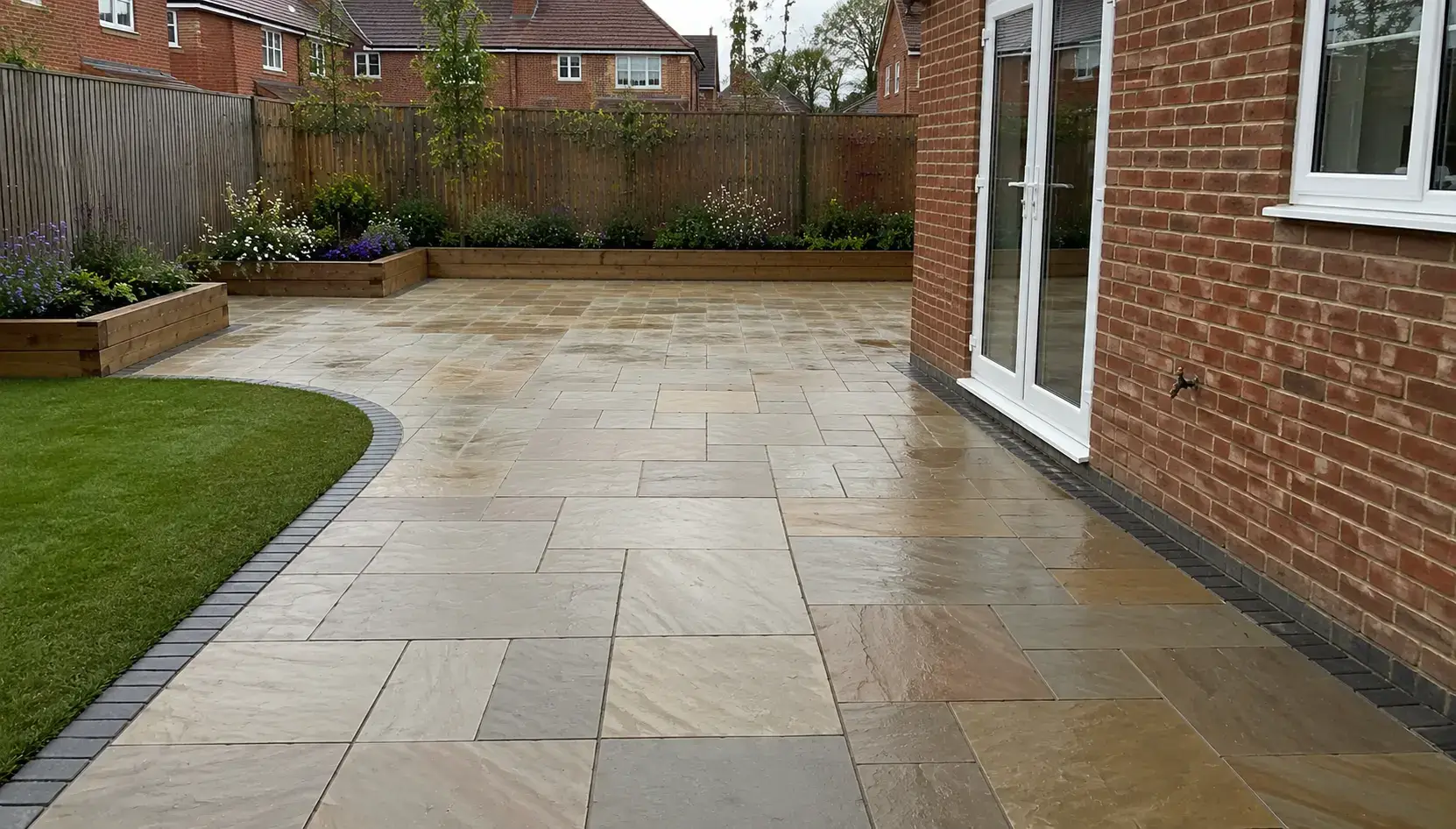
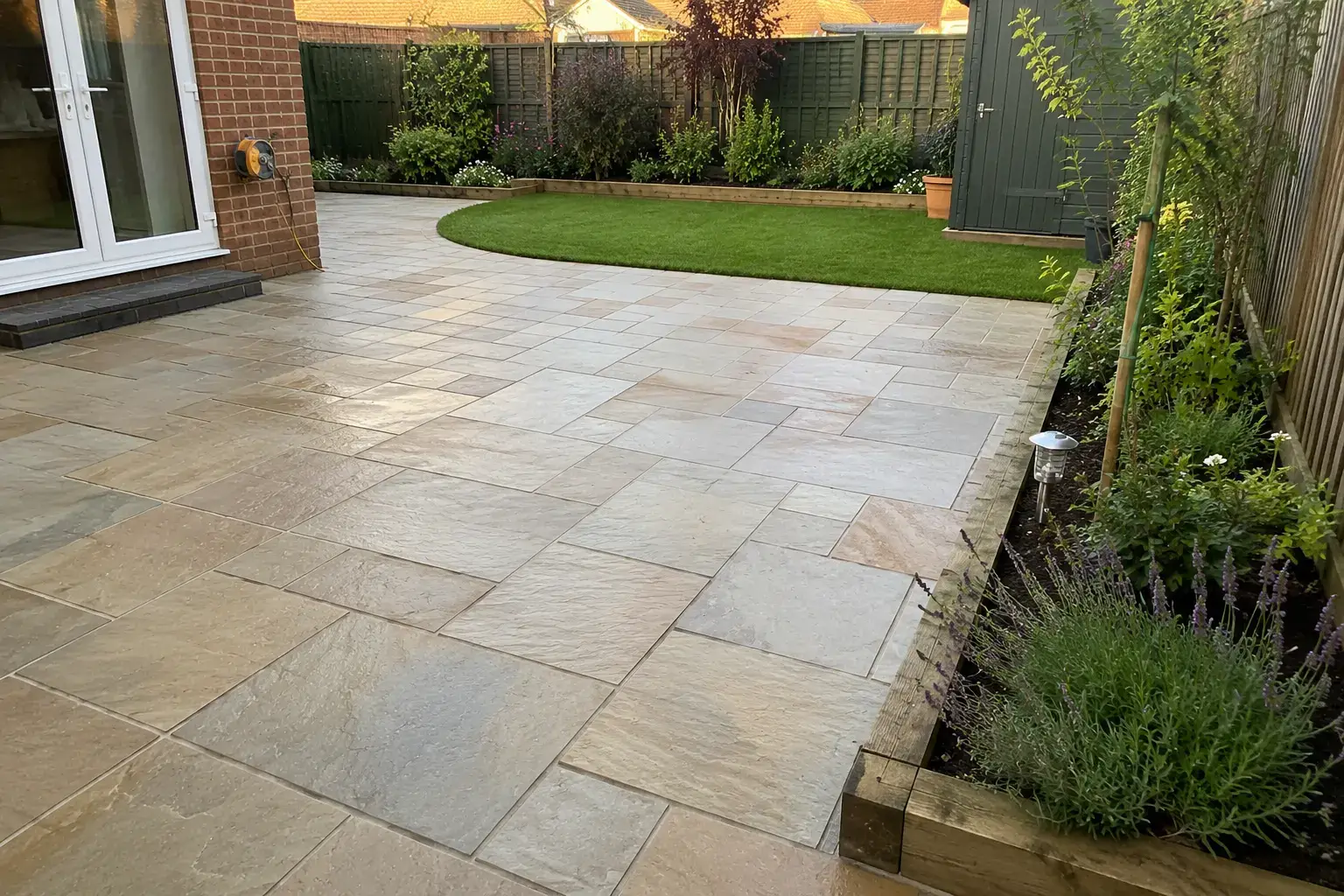
Most homeowners don’t think about what’s under their patio. Around Ely, the ground tells you everything about how long your Indian sandstone patio will last.
We work on Fenland clay all the time. Heavy stuff. It holds water, it shifts with the seasons, and it doesn’t forgive a lazy sub-base. In wet winters the water table sits high across this part of Cambridgeshire. That moisture has nowhere to go unless you plan for it from day one. We’ve seen patios laid on thin bases over near Stretham that started sinking within 18 months, the slabs rocking and joints cracking apart.
Getting the base right is the single most important part of any Indian sandstone patio. Here’s what we do on every job:
That fall matters more than people realise. Ely sits on flat, low-lying ground, so water pools fast if you don’t direct it somewhere. We see this every week on older patios that were laid without proper drainage thought.
A patio that’s failed early hasn’t failed because of the stone. It’s the ground underneath. The clay swells when it’s wet, shrinks when it dries out in summer, and that movement cracks mortar joints and lifts slabs. A thick, well-compacted sub-base acts as a stable platform that takes that movement before it reaches your Indian sandstone.
Champion Construction knows this ground because we work on it every day. No call centres, no guesswork. If your soil needs extra depth or drainage, we’ll tell you upfront.
Most homeowners in Ely don’t realise there’s a choice to make before a single slab goes down. Calibrated or uncalibrated. It matters more than you’d think.
Calibrated Indian sandstone slabs have been machine-cut to a uniform thickness. Usually around 22mm. That means every slab sits level on the mortar bed without us having to build up or scrape back underneath each one. The result is a flatter, tighter finish. Uncalibrated slabs vary in thickness, sometimes by 10mm or more. They can still look great, but they need more skill and more time to lay properly. We use calibrated slabs on most of our Indian sandstone patios because the finish is spot on and the job moves faster for you.
You’d be surprised how many patios we get called out to fix around Stretham and Soham where the stone is fine but the joints have crumbled. It’s the same thing every time. Someone used a cheap sand-and-cement mix or a brush-in compound that washed out after one Fenland winter. We use a proper resin-based or flexible jointing compound that bonds to the stone edges and handles ground movement. Here’s what good jointing does for your patio:
Get the jointing wrong and you’ll be pulling weeds out every weekend. Get it right and the patio stays put for years.
Indian sandstone comes in a few surface textures. Riven is the most popular. It has a natural split-face look with grip even when wet. Hand-cut edges give a more rustic feel. Sawn edges are cleaner, more modern. At Champion Construction, Danny and his son will bring samples to your door so you can see the colours and textures against your house before you commit. Raj Green, Autumn Brown, Kandla Grey, Mint Fossil. They all look different in Cambridgeshire light compared to a photo on a screen. Want to see them in person? Call Champion Construction on 07443 843610 for a free quote.
Talk to Champion Construction about a Indian sandstone patio built properly from the ground up, with the right base, levels and drainage for local Fenland conditions. Call for a free quote.
Most people want to know what the actual work looks like before they commit. Fair enough. Here’s how we do it, step by step, on every Indian sandstone patio we lay across Ely.
The whole job usually takes three to five days for an average-sized patio. Bigger projects around Stretham or Haddenham where gardens tend to be larger can stretch a bit longer.
We see it every week, patios that have failed because someone skipped the sub-base or rushed the mortar bed. That’s not how we work.
Champion Construction is a family business run by Danny and his son. You deal with the owner from start to finish. No subcontractors turning up that you’ve never met. And if Ely’s famous wet weather rolls in mid-job, we cover everything up properly and crack on when it clears. Your patio won’t suffer for it.
Most homeowners don’t realise how little effort Indian sandstone actually needs. A bit of regular care goes a long way. It keeps the stone looking fresh for years without any fuss.
The biggest thing? Keep on top of leaves and debris. Sounds obvious. But around Ely, especially if you’re near mature trees in areas like Stuntney, fallen leaves sit on the stone through autumn and winter. They trap moisture. That moisture breeds algae and moss, which makes the surface slippery and stains the stone green. A stiff brush once a fortnight sorts that out before it gets a grip.
You don’t need anything fancy. Here’s what works:
We see patios every week where someone’s blasted the stone with a pressure washer on full power. That strips the surface, opens up the pores, and actually makes the stone hold more dirt going forward. Gentle pressure, done right, is all you need.
Sealing is worth thinking about too. A good quality sealant helps Indian sandstone resist staining from food, drink, and bird droppings. It won’t change the look of the stone if you use a natural finish sealant. For guidance on tackling specific marks and discolouration, this advice on how to remove Indian sandstone stains covers the most common issues in detail. We can talk you through the options when we finish your patio in Ely.
And if your joints start crumbling or a slab shifts? Don’t leave it. Small problems turn into bigger ones fast, especially with the wet Fenland winters we get. We do patio repairs across Ely and surrounding villages like Haddenham and Sutton, so get in touch before it gets worse. Call Champion Construction on 07443 843610 for a free quote.
A well-laid Indian sandstone patio with a proper sub-base stays put for years. A few minutes of care each month keeps it spot on.
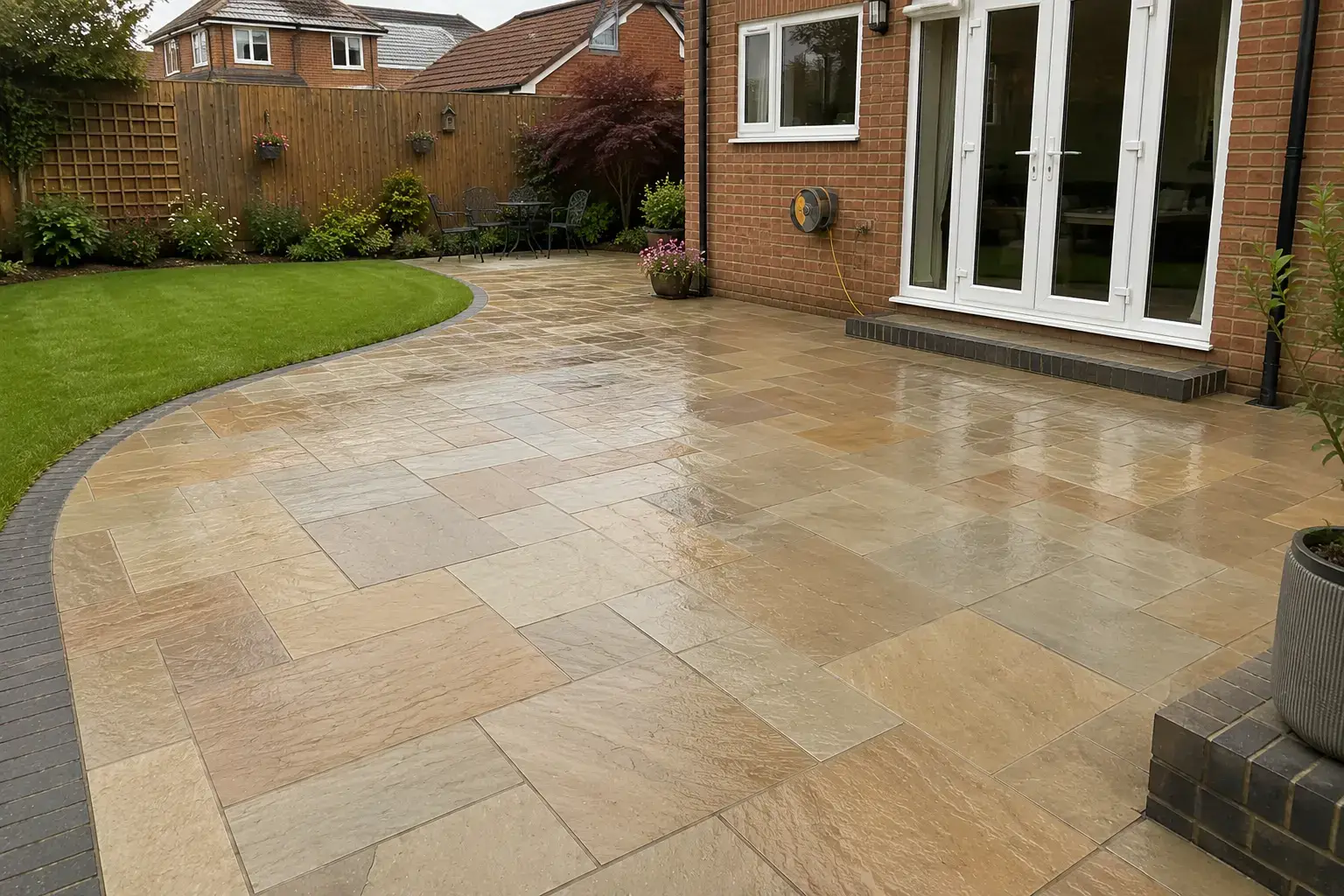
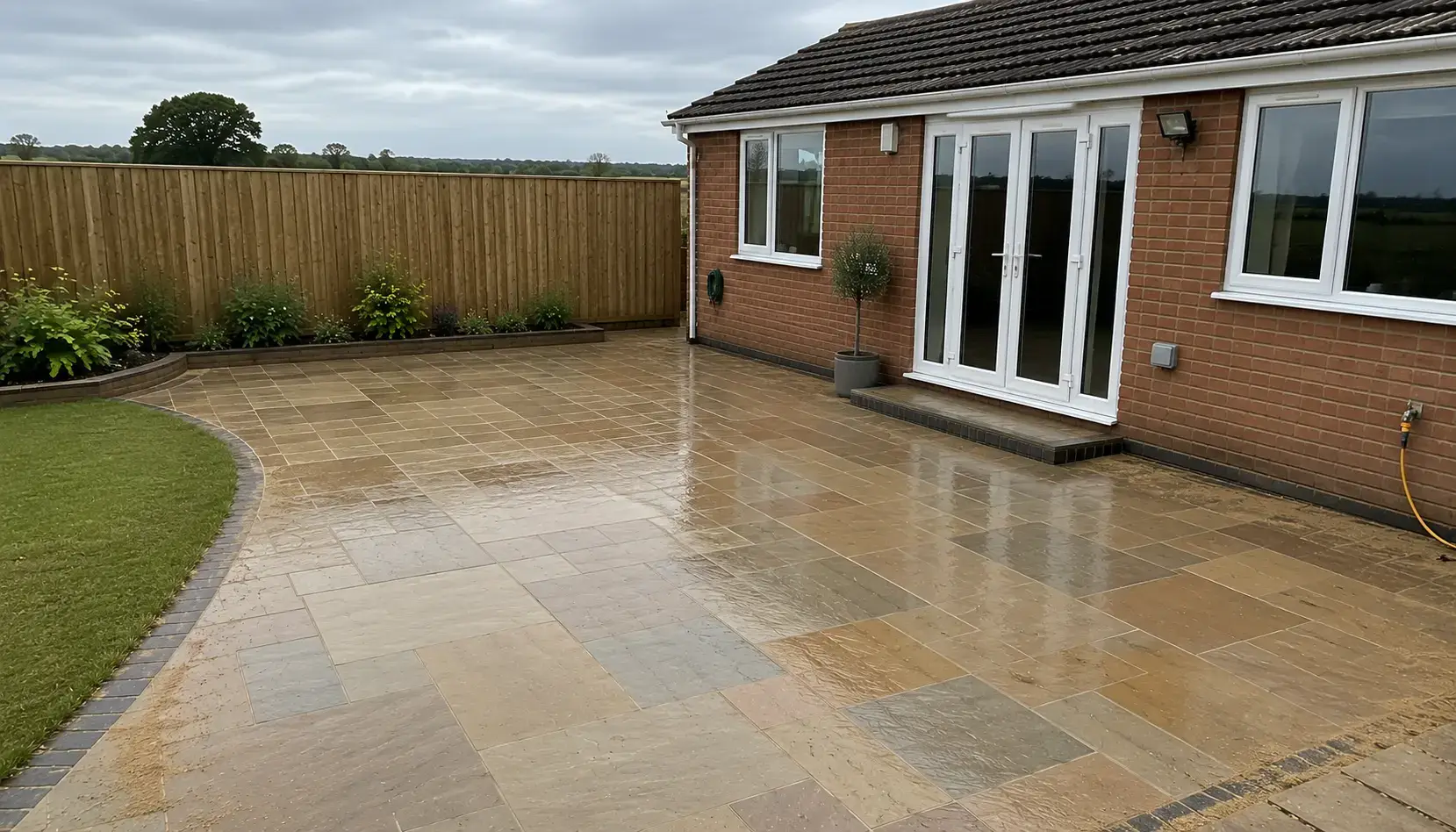
We lift and re-lay loose, sunken or uneven slabs, sorting the base and falls so the repair holds properly.
A neat, practical choice for garden spaces, with strong edging, proper falls and a finish that is easy to live with.
A clean, modern patio finish that is easy to look after and works well for a sharper, more contemporary garden.
Common questions about Indian sandstone patio services in Ely
Looking at other patio options? Take a look at our Patios Services in Ely