
Patio repairs in Ely from Champion Construction. We lift loose, sunken or uneven slabs and blocks, fix the failed sub-base underneath, then re-lay with the right falls and jointing for Fenland clay ground. Patio repair work across Ely, Cambridge and nearby villages. For a free quote, call 07443 843 610.
Most homeowners don’t realise their patio is failing until they trip on a raised slab or notice puddles that won’t shift. By then, the damage underneath is worse than what you see on top.
Ely sits on heavy clay soil. That’s the root of most patio repairs we do. Clay moves, swelling when wet and shrinking when dry. Over a few seasons, that constant shifting pulls slabs apart, cracks pointing joints, and pushes individual flags up or down. A patio that looked spot on two years ago can end up looking like a jigsaw puzzle that doesn’t quite fit.
The flat, exposed landscape around the Fens doesn’t help either. Water sits. It doesn’t run off like it would on a slope. If your patio wasn’t laid with a proper fall, or if the drainage has silted up, you’ll get standing water after every rain. That water works its way under the slabs and softens the bed. Then frost gets in over winter, expands, and lifts everything.
Here’s what we see most often across Ely and Stretham:
The original patio wasn’t built on a deep enough sub-base. We see it every week. Someone’s had a patio laid on a thin screed of sand over bare clay, the ground moves, and the whole thing goes. A proper sub-base of compacted MOT type 1 at 100mm to 150mm deep makes a massive difference to how long a patio lasts.
And then there’s tree roots. Older properties near the cathedral or along Broad Street often have mature trees close to patios. Those roots push up slowly, cracking mortar beds and displacing slabs one at a time. You might not notice for a year or two, then suddenly half the patio is uneven.
The good news is most of these problems are fixable without ripping everything out.
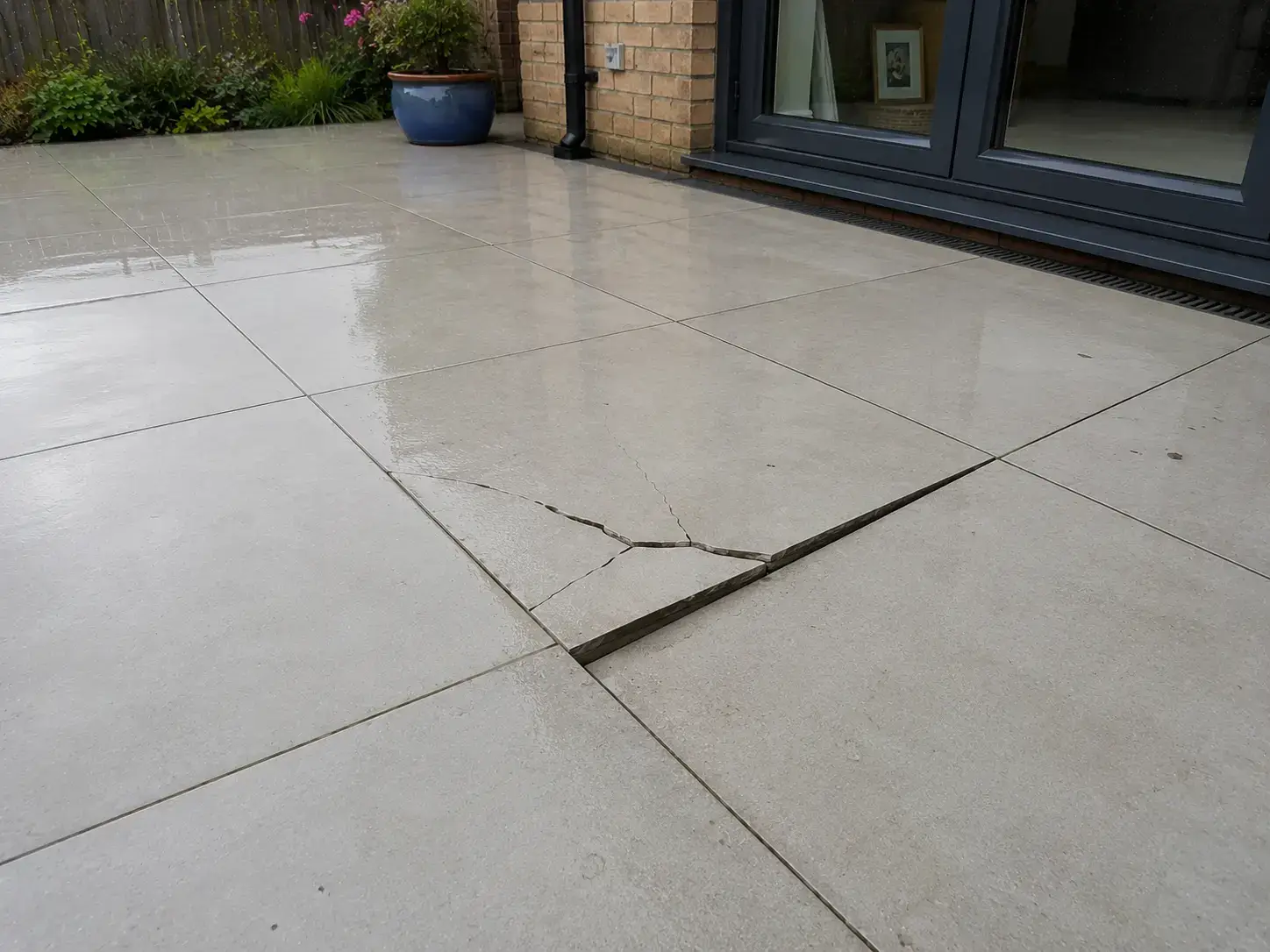
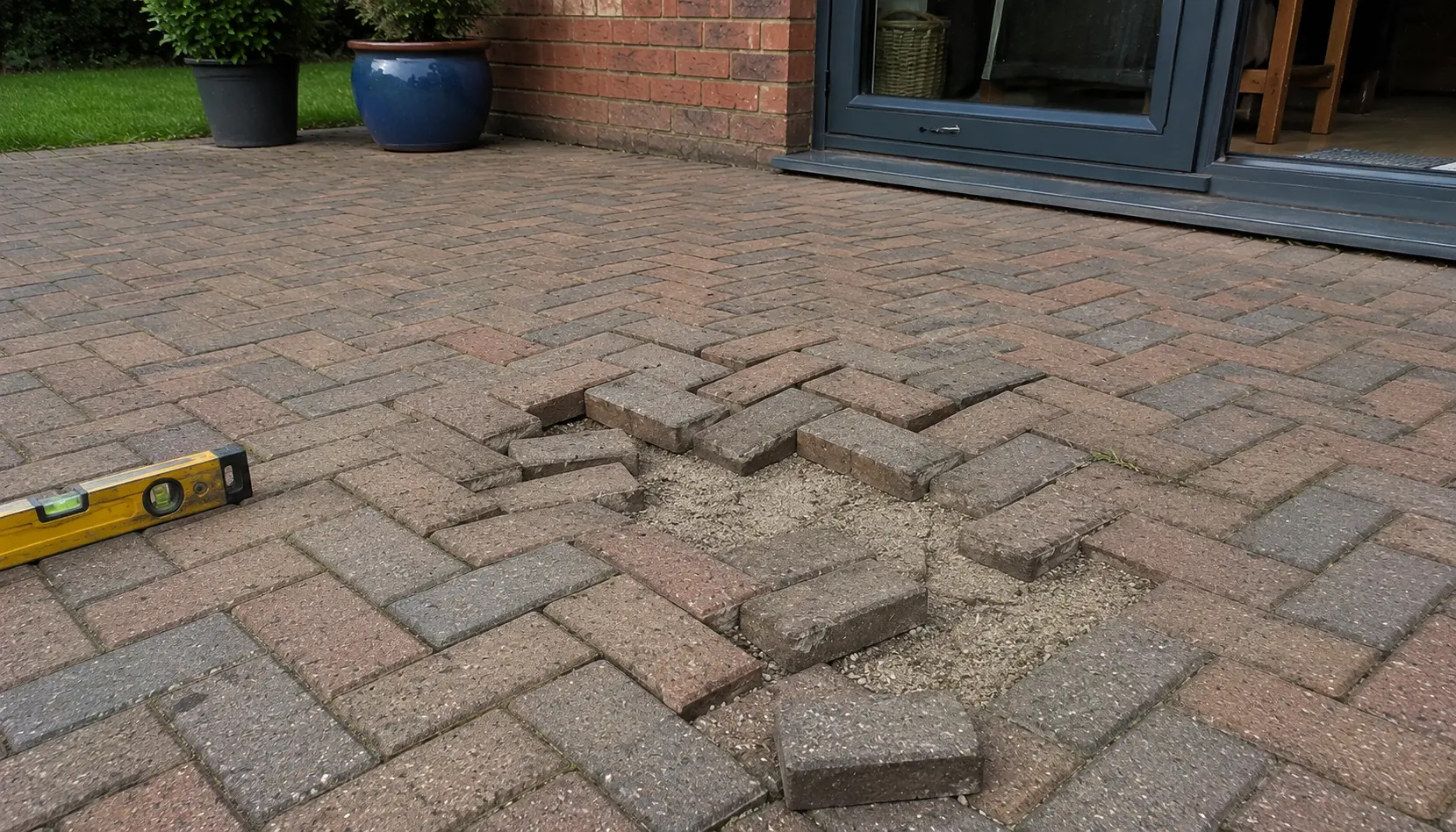
Most patio repairs in Ely start with something small. A wobble underfoot or a crack you keep stepping over. Then one wet winter goes by and the whole thing looks tired.
We see the same problems week after week across Ely and out towards Stretham. The ground here does a number on patios. Heavy clay soils shift with the seasons, the water table sits high in places, and frost gets into every gap it can find. That’s not a design fault. It’s Cambridgeshire.
Here are the issues we get called out to most often:
The actual patio surface is fine on many jobs. The problem is underneath. A slab doesn’t crack for no reason, it cracks because something moved below it.
So how do you know if it’s a quick fix or something bigger? If one slab rocks, that’s probably a tidy little job. But if you’ve got four or five slabs sinking in the same area, the sub-base needs sorting out properly. Patching over bad ground doesn’t work. We’ve lifted patios where the previous builder laid slabs straight onto soil with no sub-base at all.
If your patio in Ely has any of these signs, it’s worth getting someone out to look before the damage spreads. Champion Construction is run by Danny and his son, and you deal with the owner from start to finish. No call centres, no runaround.
This is the question we get asked more than anything. You’re staring at a dodgy patio and thinking, can this be saved or do I need a new one? Honest answer: most of the time, patio repairs in Ely sort the problem out without ripping everything up.
But not always.
Here’s how we think about it. If the damage is in one area, maybe a few cracked Indian sandstone slabs or some sunken block paving near the back door, that’s a repair. We can lift those sections, sort the sub-base underneath, and relay. Done right, you won’t spot where the old ends and the fix begins. We do this every week across Ely and out towards Stretham.
A full replacement makes more sense when you’re dealing with widespread problems. These are the signs we look for:
That last one catches people out. You might want a simple repair on your porcelain patio, but if the supplier stopped making that colour three years ago, a patch job looks obvious. In those cases we’ll talk you through options. Sometimes a new patio section with a contrasting border turns the mismatch into a feature.
It’s the base that decides things. Fenland clay soil moves. A lot. If the ground underneath has shifted badly, laying new slabs on top of a ruined base is throwing money away. We’d rather tell you that straight than take a job that won’t last.
Champion Construction is a family business run by Danny and his son. You deal with the owner from start to finish, so there’s no pressure either way. We’ll come out, have a proper look, and give you an honest answer. If a repair will hold up for years, that’s what we’ll recommend. If it won’t, we’ll say so.
Not sure which way your patio’s going? Call Champion Construction on 07443 843610 for a free quote.
Champion Construction provides patio repairs in Ely, Cambridge and the surrounding villages, fixing loose slabs, uneven paving, sunken areas, damaged joints and drainage problems. Get in touch for a free quote and practical advice on repairing your patio properly
Every patio repair job in Ely starts the same way. We turn up, have a proper look, and work out what’s actually going on underneath. No guessing.
Here’s how we run through a typical patio repair from start to finish:
Most patio repairs around Stretham and the surrounding villages take one to two days. Bigger jobs where the sub-base needs a full dig-out might stretch to three.
Champion Construction is Danny and his son’s business. You deal with the same people from the first look to the final sweep. No subcontractors turning up that you’ve never met.
The repair is smaller than people expect. A section of sunken block paving near the back door can be a tidy little job done in a morning. But leaving it means water pools, frost gets in, and by next winter you’ve got a much bigger problem on your hands.
Most patio repairs we see in Ely fail within a couple of years. Not because the slabs were bad. Because nobody fixed what’s underneath.
We see this every week. A homeowner’s had someone re-lay a few sunken Indian sandstone slabs or re-point some block paving, and six months later the same spots are dropping again. The surface work looked fine, the problem was below it. If the sub-base isn’t right, nothing on top will stay put for years.
Around Ely and Stretham, we’re dealing with heavy clay soils. Clay holds water. It swells when wet and shrinks when dry. That constant movement pushes slabs out of line, cracks pointing, and creates dips where puddles sit. A proper patio repair on clay ground means digging down and getting the base right before anything goes back on top.
Here’s what we do when the sub-base has failed:
That fall is the drainage bit. Water needs somewhere to go. We aim for a minimum 1 in 60 fall so rainwater runs off into a lawn, border, or drain. Get that wrong and you’ll end up with standing water against your back wall. In a Fenland winter, that’s a recipe for damp.
But drainage isn’t always about the slope. Sometimes we need to add a channel drain or a soakaway, especially on larger porcelain patios where the surface doesn’t absorb anything. Champion Construction is Danny and his son’s business, so you’ll get honest advice on what your patio actually needs. No upselling, no guesswork. If the base is sound and it’s only the pointing that’s gone, we’ll tell you that too.
Done right, a repaired sub-base should outlast the slabs sitting on it.
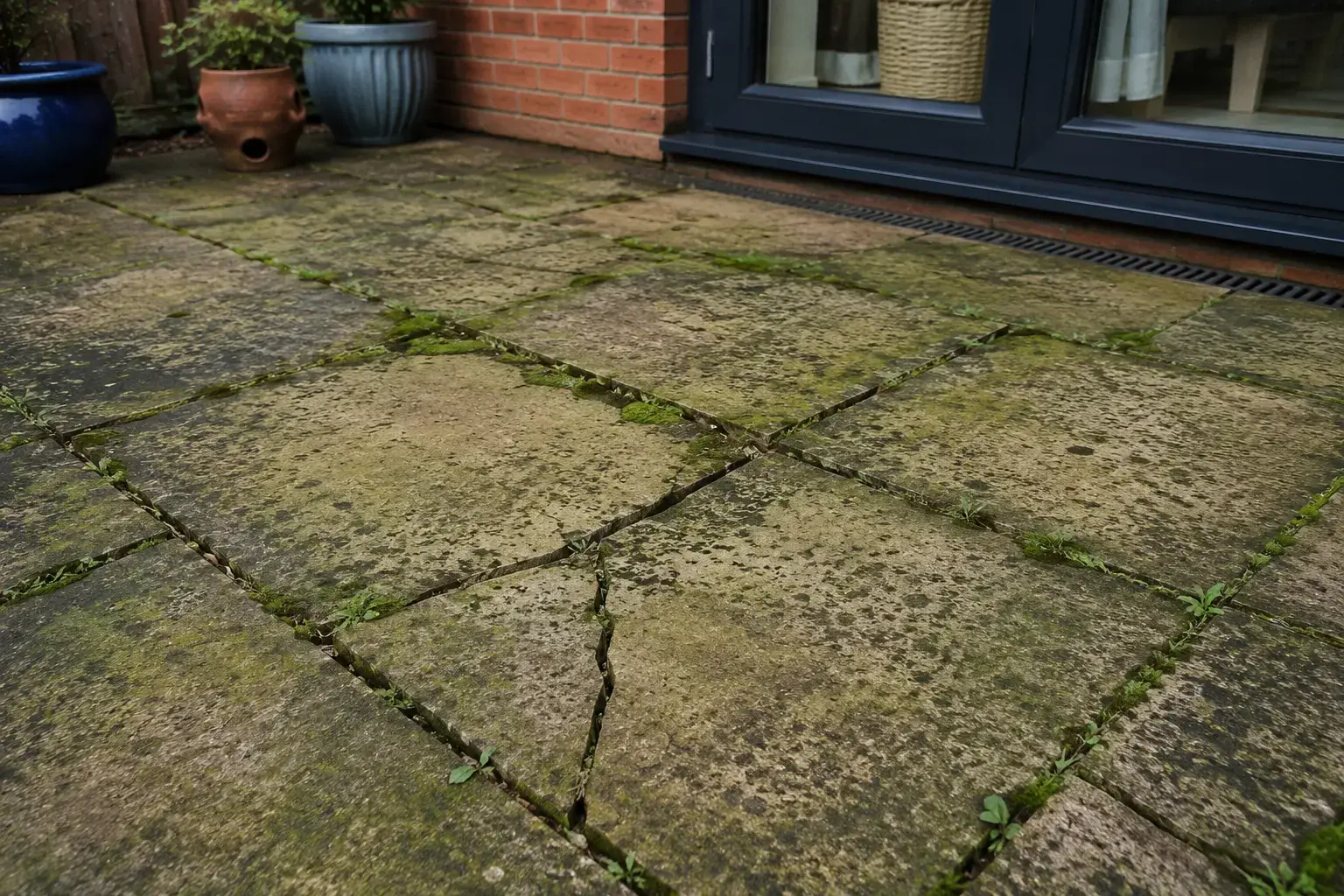
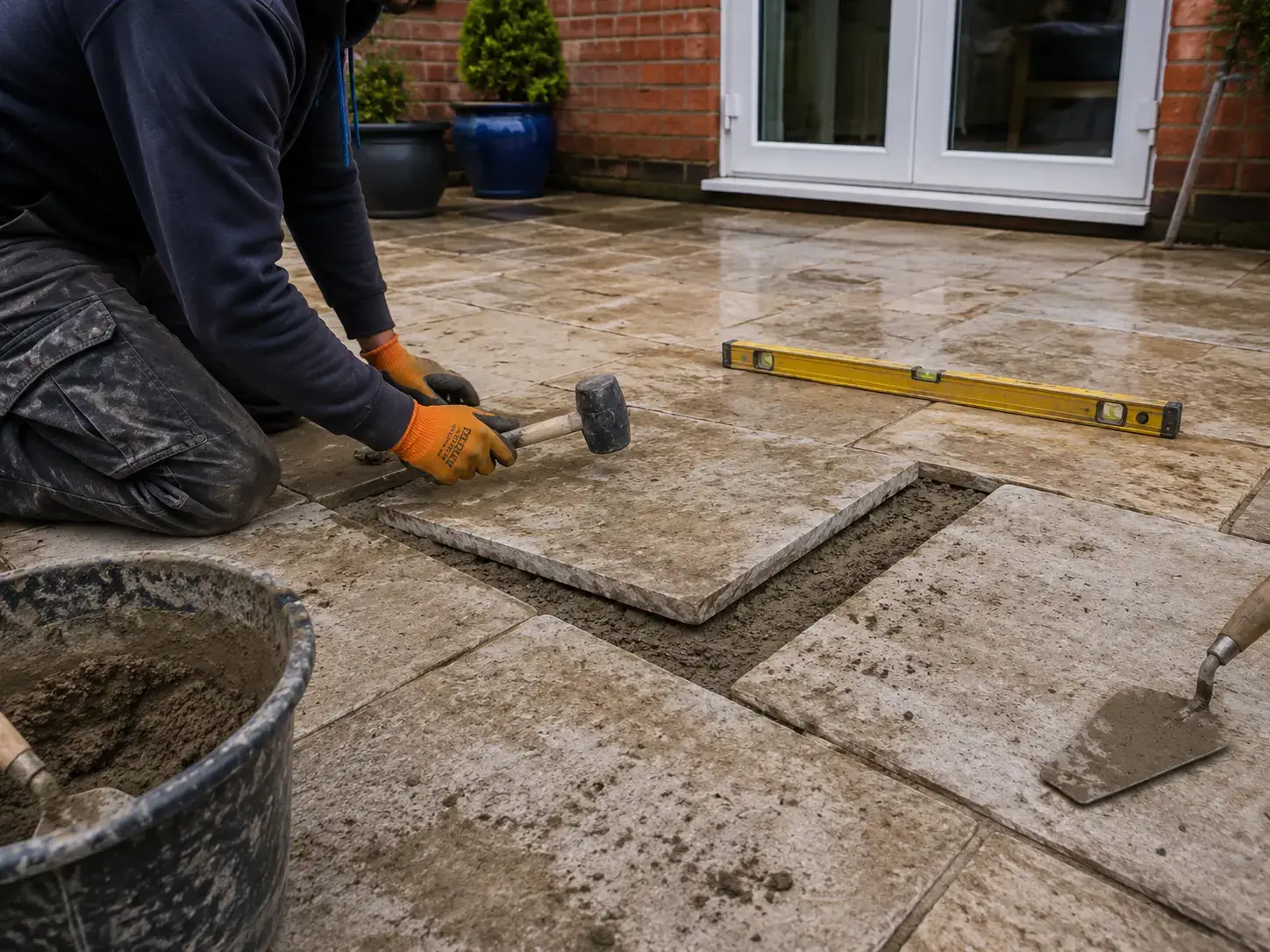
A clean, modern patio finish that is easy to look after and works well for a sharper, more contemporary garden.
A neat, practical choice for garden spaces, with strong edging, proper falls and a finish that is easy to live with.
Natural stone with warm tones and individual character, ideal if you want a patio with a more traditional garden feel.
Common questions about patio repairs in Ely
If you’re looking at patio options beyond repairs, take a look at our full range of patios services in Ely.